


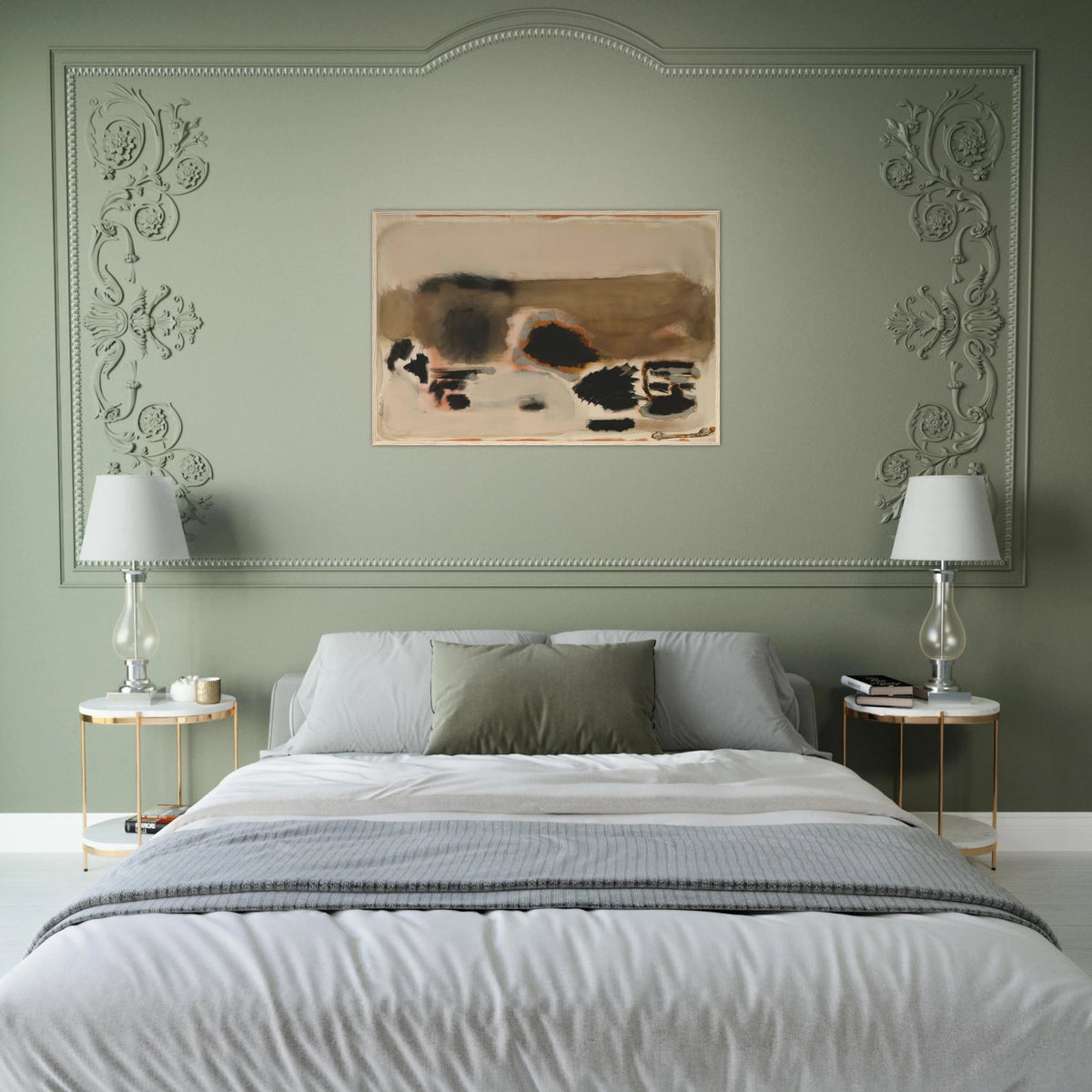
Discover Unlimited Art Possibilities
At Rothko Prints, you can find virtually any artwork from any artist, available in a wide range of sizes to perfectly match your space.
If you didn’t find what you’re looking for, contact us at support@rothkoprints.com . We will source any artwork and produce it in any size and format you need, including art prints, posters, canvas, framed pieces, framed canvas, and more.
For dedicated art enthusiasts, we also offer handcrafted replicas of any artwork, carefully painted by highly skilled artists using traditional techniques.
For custom requests, contact us at support@rothkoprints.com .
What is the significance of No.5/No.24, 1948 in Rothko's career?
This work marks Rothko's pivotal shift from surrealism to pure abstraction, where color fields emerge as the primary vehicle for emotion, foreshadowing his iconic style.
What are the dimensions of the frame?
The frame is 20-25mm thick and 10-14mm wide, offering a slim, elegant profile that complements any decor.
What materials are used for the framed poster?
We use a durable pine wood frame, shatterproof plexiglass, and 250 gsm FSC-certified matte paper for archival quality.
Is the poster ready to hang?
Yes, each framed poster includes a hanging kit and is ready to hang directly on your wall.
What sizes are available?
We offer four sizes to fit your space, all maintaining the same high-quality craftsmanship.
Can I choose the frame color?
Yes, you can select from four frame types: white, wood, dark wood, or black.
What is the paper weight and finish?
The paper is 250 gsm (110 lb), 0.29 mm thick, with a matte, uncoated, natural white (off-white) finish.
Is the print protected from damage?
Yes, a shatterproof plexiglass front protects the poster from scratches and breakage.
Is the paper eco-friendly?
Absolutely, the paper is FSC-certified, ensuring sustainable sourcing.
What is the return policy if the item arrives damaged?
We offer a free return if the item arrives damaged. Contact us for a replacement or refund.
How does Rothko's color field technique affect the viewer?
Rothko's technique involves layering translucent washes to create luminous, immersive color that evokes deep emotional responses.
What is the historical context of No.5/No.24, 1948?
Painted in 1948, this piece emerges from post-war America, reflecting the existential and psychological explorations of the era.
Why is Rothko considered a master of abstract art?
Rothko masterfully uses color and form to express universal human emotions, making his work timeless and influential.