


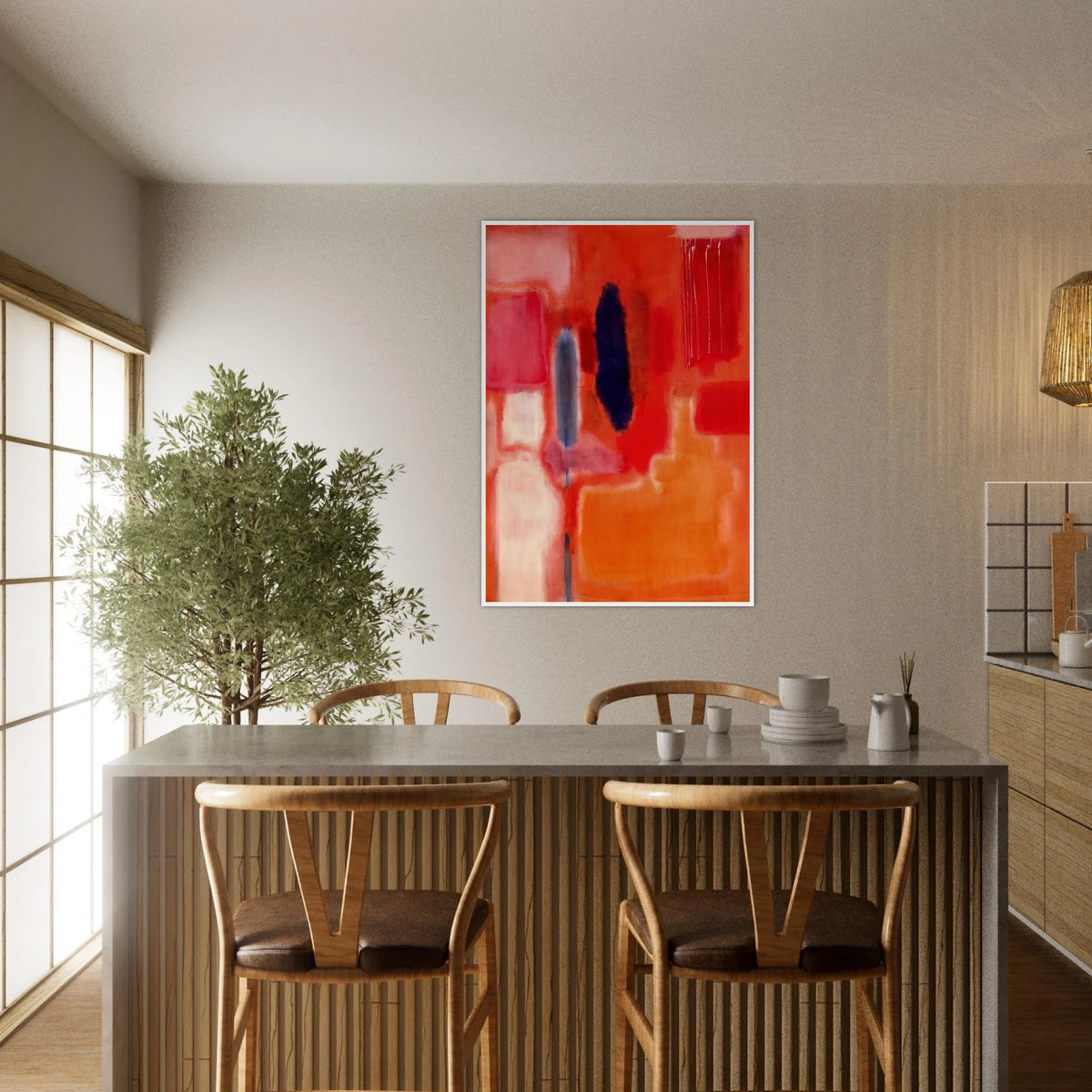
Discover Unlimited Art Possibilities
At Rothko Prints, you can find virtually any artwork from any artist, available in a wide range of sizes to perfectly match your space.
If you didn’t find what you’re looking for, contact us at support@rothkoprints.com . We will source any artwork and produce it in any size and format you need, including art prints, posters, canvas, framed pieces, framed canvas, and more.
For dedicated art enthusiasts, we also offer handcrafted replicas of any artwork, carefully painted by highly skilled artists using traditional techniques.
For custom requests, contact us at support@rothkoprints.com .
What is the return policy if my framed poster arrives damaged?
We offer a free return for any item that arrives damaged. Your satisfaction is guaranteed.
Is the Mark Rothko 'No. 9 - 1948' print ready to hang?
Yes, our framed Rothko prints come with a hanging kit, making them ready to hang immediately.
What materials are used in the frame?
The frame is crafted from durable pine wood, available in white, wood, dark wood, or black finishes.
What type of paper is the reproduction printed on?
We use 250 gsm (110 lb) museum-quality paper, with a matte, uncoated finish for an authentic look.
Is the paper acid-free and archival?
Yes, the paper is FSC-certified and of archival quality, ensuring your print endures.
Does the print come with plexiglass protection?
Yes, all our framed posters are protected by shatterproof plexiglass for safety and longevity.
What sizes are available for this artwork?
We offer this artwork in four sizes to suit various wall spaces.
Can I choose the frame type?
Yes, you can select from four frame types: white, wood, dark wood, or black.
Is this a lithograph or a giclee print?
It is a high-quality fine art reproduction using archival pigments for lasting color.
Does the print include the artist's signature?
Rothko's signature is not included, as it is a reproduction, not an original work.
What is the significance of 'No. 9 - 1948' in Rothko's career?
This piece is transitional, moving from surrealism to his signature color field style.
How does Rothko's technique evoke emotion?
He used layered, translucent washes of color to create depth and luminosity.
What era does this artwork represent?
It represents the late 1940s, when Rothko was developing his mature abstract style.